Personal Articles Floater(PAF), Insuring Individual Valuble Items

A Lot of us when setting up homeowners insurance, forget a very important item on our policies. Personal article floater insurance. A lot of us have very valuable items, that we don’t insure. One of these very obvious items is mostly you or your spouses wedding ring.

In this blog, I am going to cover what a personal article floater insurance policy is, and why you might be cutting yourself by not insuring something important.


What is a personal article floater?

Since valuable things such as jewelry are limited on the amount of coverage a home owners policy’s will cover, the industry offers this policy. The industry offers policies for jewelery, guns, coins, stamps, golf clubs camera’s and other items. This all depends on what the insurance company offers. The policy insures the individual item. Both the insured and insurer agree on insuring at a certain amount. An appraisal or some sort of proof of value is required. Sometimes a deductilbe does apply, at usually a very low level.  The most common personal article floater policies are for jewelry, mostly wedding rings.

Is this policy idealistic for me?

This all depends on the client. If you have a valuable wedding ring worth 50 thousand dollars, yes you should insure it. That alone is a small investment and fortune. Sometimes people decide its idealistic to self insure. I know a couple of gun collectors who don’t insure there guns. Th reason is so much cost over time. Sometimes you are better off getting a really good safe, and locking up your valuables in there, or even getting a safety deposit box.
 

Ordinance And Law Coverage On A Home Owners Insurance Policy

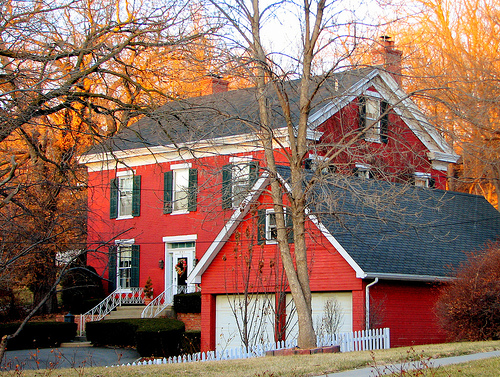
home-insurance-homeowners-condo-insuranceHaving an older home or property, is almost sometimes like owning a beautiful antique. This could be your primary dwelling, seasonal property, rental condo or home. As newer homes are being built, your house keeps its individuality.  As we know, new code laws are either being updated or made to help try to improve, energy, safety, and other purposes. As a homeowner with your old house, this doesn’t effect you, because its most likely grand fathered in. Or Does it?

Most of the time it doesn’t effect the average homeowner. But when it comes to the possibility of a  insurance loss on your home or property, everyone can become vulnerable to new code laws. The chances are the older your home or structure, the less compliant they are with current codes. In the event of a total or partial loss of your property, for example due to a fire, when it is re-built it has to be compliant with all new county, city, city, state, federal and association codes.

This will cover you three ways:

  1. Loss to undamaged part of building or dwelling. (Example: The part of the undamaged building has to be demolished and rebuilt due to code.)
  2. Increased Demolition Cost: (Due to having to demolish and undamaged part of the building or dwelling)
  3. Increased Cost Of Construction. (Due to higher cost for compliance for new law codes)

Coverage is usually built in at, %10 of the structure/dwelling insurance amount. This can be increased with an endorsement or when a policy is started.

If you have any questions about your current policy, please contact us.

Feel free to leave a comment.


A Nice Homeowners Insurance Inventory Check List- Courtesy Colorado DORA Division Of Insurance

It is always good to take time and produce an inventory of your homes valuables and property. Here is a link to the Colorado Division of Insurance, courtesy inventory checklist. Please keep in mind that it is always a good idea, to store these documents externally. I would recommend Google Documents.

If you have any questions, feel free to contact us. We can write insurance in 45 states. Or Leave A Comment.

As A Landlord, Should I Require Tenant’s To Carry Renter’s Insurance?

Having an investment property can be a great return on investment. But on the contrary, you do have the management aspect. This can include maintenance, leases, insurance and etc. One of them being your insurance policy. In this blog were going to cover why your tenants should have renter’s insurance, or better known as a homeowners policy number 4.  If you want to know more about landlord insurance, please visit this link.

What Is Renters Or Tenants Insurance or Known As A Ho-4?

A HO-4 policy, also known as renter’s insurance, covers only the tenants interest. This includes the following coverage,

  • Personal Property
  • Medical Payments
  • Loss Of Use
  • Personal Liability
  • Other Coverages are available

So Why Should I As Landlord, Require  My Tenants to have Tenants Insurance?

To avoid any legal problems or losses from your tenant.  A Renters Policy has a personal liability built in.  If your renter were to encounter any legal problems or losses, she/he is covered.  Here are some examples of what could happen.

-A renter invites a guest over and they slip and fall on the premises.

-They could accidentally start a fire in the premises.

With renters insurance, any type of law suits, or premises losses are going to fall on their policy. If your renter does not have insurance, you as a landlord are going to have to use your own policy.  Requiring your renter to have insurance can avoid huge headaches in the event of a loss or legal problems. The last thing you need to deal with as a landlord is getting sued for one of your tenant’s actions. In additon if a loss does occur on your policy, chances are your premium is going to increase on next renewal.

How much personal liability coverage should your renter have?

All you should be worry about on your tenant’s policy is their personal liability.  I would recommend a $300,000 liability requirement and it costs the tenant $15.00 – $30.00 per year extra.  This for the most part will cover most law suits that a tenant could encounter.  This for the most part covers the average cost of a dwelling or condo if were to completely burn to the ground.  If you feel that this will not be sufficient, your renter could go with a $500,000 personal liability or higher.

How much does Renters Insurance cost my tenant? 

Depending on how much coverage the tenant decides to go with besides your liability requirements, it can run as low as $80 per year all the way up to $300.  A lot of this depends upon the renters credit, previous losses, and how much other coverage they decide to buy and etc.

How do I get Proof Insurance As A Landlord?

You should get a Certificate of Insurance or Coverage Confirmation from the company or agent writing the insurance policy. I would also recommend getting listed as an additional insured on the policy if possible. That way you are always getting notified on any major policy changes, but mostly if the policy is being cancelled for any reason. Just like the insured, you get a policy packet  in the mail with detailed coverages, and notifications just like the tenant would.

Please contact us with any questions or for any quote requests for both Landlords and Tenants.

What Type Of Insurance Policy Do I Need For A Rental Property?

Rental property’s can provide great residual incomes, and right now with the rental market in demand, a lot of people are putting their house’s up for rent or buying investment properties. Before you do this, your insurance policy must be written correctly, or else you could have some major gaps in coverage.

First of all lest highlight some of the most common types of properties.

  • Apartment Building
  • Condo
  • Dwelling

Apartment Building Insurance

This policy is designed for a building that houses multiple units, usually more than 3.  The policy includes building coverage, a general liability, business personal property coverage, loss of use, crime coverage and more.  This policy is strictly designed for apartments.

We usually write these policies through Travelers, Philadelphia or Middle Oak.

Landlord Condo Insurance

This policy is built for someone who owns a condominium and rents it out. It includes interior dwelling coverage, loss of rent, medical payments, and landlord liability. You can add things such as extended liability coverage, and loss assessment. This policy is usually written under Dwelling Fire Policy Form 8.

Landlord Dwelling Insurance

Investment houses are either written under a DP-1 or a DP-3. Or known as a dwelling fire policy. Most policies are written under a dp-3, because it gives you replacement cost coverage on the dwelling, which is better than the dp-1 actual cash value coverage on a dwelling. Always make sure you have the following coverages on your dwelling rental property.

  • replacement cost on dwelling(dp-3)
  • extended dwelling coverage, at least 120 percent
  • landlord business property(stove top, dishwasher, fridge, washer dryer, etc)
  • other structure coverage
  • loss of use, for at least 12 months
  • landlord liability
  • sewer back up
  • Ordinance & Code Coverage

If you have any questions or want a quote contact us.

So What is an HO-5 Policy?

When you are purchasing a Condominium, you need an HO-5 form.  This form is designed with the Condo in mind.  It provides open peril coverage on personal property and contents of the insured, in addition to open peril coverage on the dwelling and other structures.

Losses to personal property and contents are paid on an actual cash basis and losses to the dwelling are paid on a replacement cost basis.

Find out more by contacting Denvers Insurance and speak to one of our Insurance Agents.